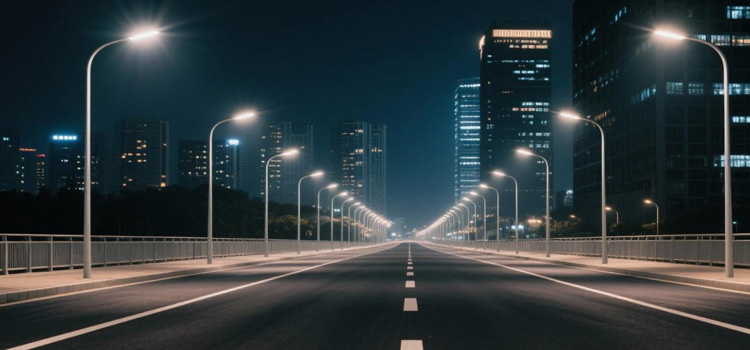
LED street light is a street lamp that uses light-emitting diodes (LEDs) as its light source, replacing older technologies like high-pressure sodium or metal halide lamps. They are known for being more energy-efficient, lasting longer, and providing more directed light, which reduces energy waste and light pollution. LEDs work by passing electricity through a semiconductor material to produce light.
Key characteristics of LED street lights:
• Energy-efficient: They consume significantly less electricity, which can lead to substantial energy and cost savings.
• Long lifespan: They have a much longer lifespan, often lasting between 25,000 and 50,000 hours, which reduces the frequency of replacements.
• Directional light: They direct light onto the road and pavement where it's needed, minimizing light pollution into homes and the night sky.
• Programmable and controllable: They can be dimmed when appropriate, and smart versions can be controlled remotely and integrate sensors for traffic and environmental monitoring.
• Instant-on: Unlike older lamps that require a warm-up period, LEDs turn on and off instantly.
• Improved light quality: They produce a brighter, whiter light, which can improve visibility for drivers and pedestrians.
Common applications:
• Residential streets: Provide better visibility and security in neighborhoods.
• Urban streets: Improve driver and pedestrian safety with uniform, high-quality light.
• Highways and expressways: Offer enhanced visibility over wide areas for drivers.
• Parks and recreational areas: Enhance safety for evening activities and make the areas more inviting.
• Industrial and warehousing areas: Improve safety and visibility for workers and visitors in large commercial and industrial zones.