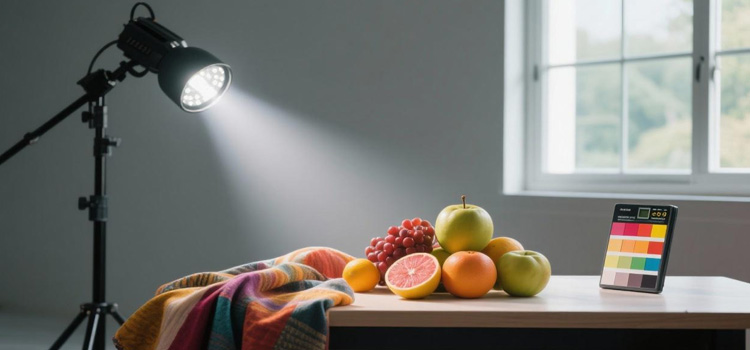
CRI, or Color Rendering Index, is a measure of how accurately a light source, such as an LED, reveals the true colors of objects compared to natural daylight. The index is on a scale of 0 to 100, where 100 represents perfect color rendering, and higher numbers indicate greater accuracy. A higher CRI means objects will look more vibrant and their colors will appear more true-to-life, while a lower CRI can make colors appear dull or washed out.
How CRI works:
• Measurement: CRI evaluates a light source's ability to render the color of 15 different object colors when compared to how those colors would look under a standard, natural light source like sunlight.
• Benchmark: A CRI of 100 is the benchmark, used to represent the color accuracy of natural daylight.
• Spectral composition: The difference in spectral composition between a light source and natural light affects how colors are rendered. For example, an LED light with the same color temperature as daylight might still have a lower CRI if it's lacking in certain colors, like red, that are present in natural light.
Common applications:
• Offices, schools, and retail: Provide bright, even, and consistent illumination for work and retail environments.
• Factories and warehouses: Used for high-intensity lighting in large industrial spaces.
• Signage and displays: Smaller fluorescent lamps like T5s are common in retail displays and signs.
• Task and accent lighting: Applied in kitchens for under-cabinet lighting or for accenting architectural features.
Scale interpretation:
• High CRI (90-100): Excellent, colors appear vivid and true-to-life.
• Good CRI (80-89): Acceptable for most applications, with good color accuracy.
• Poor CRI (below 70): Colors may appear distorted or washed out.
Why CRI is important:
• Visual accuracy: High CRI lighting is crucial in environments where color is important for function and aesthetics, such as retail stores, art studios, and healthcare facilities.
• Safety and efficiency: In industrial settings, a good CRI helps with tasks that require color differentiation and accuracy, improving safety and productivity.
• Reduced eye strain: High CRI lighting can improve visual comfort and reduce eye strain in workplaces and homes.
• Aesthetics: For residential use, it enhances the look of interiors by making colors appear richer and more vibrant.