-
UFO High Bay Light
210LM/W, 3CCT&Power
Model UFO
Switchable Beam Angle -
UFO High Bay Light
210LM/W, 60W, 80W, 100W
Model UFO
Microwave Motion Sensor -
UFO High Bay Light
100W, 150W, 200W
Model UFO
210lm/W -
UFO High Bay Light
100W, 150W, 200W
Model UFO
210lm/W -
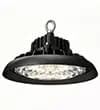
UFO High Bay Light
100W, 150W, 200W
Model UFO
190lm/W -
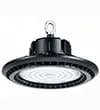
UFO High Bay Light
100W, 150W, 200W
Model UFO
190lm/W -
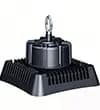
UFO High Bay Light
100W, 150W, 200W
Model UFO
Square Version -
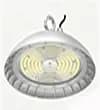
UFO High Bay Light
100W, 150W, 200W
Model UFO
Smooth Surface, White Houseing
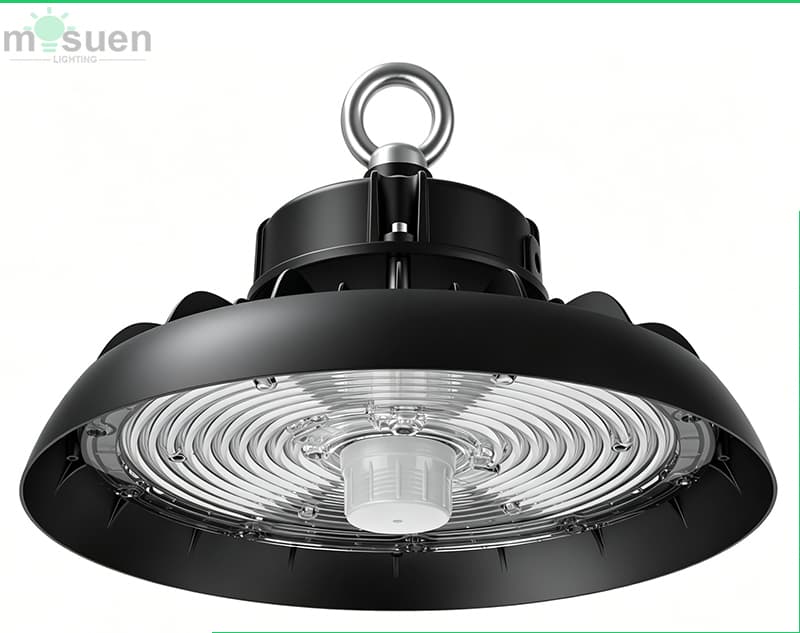
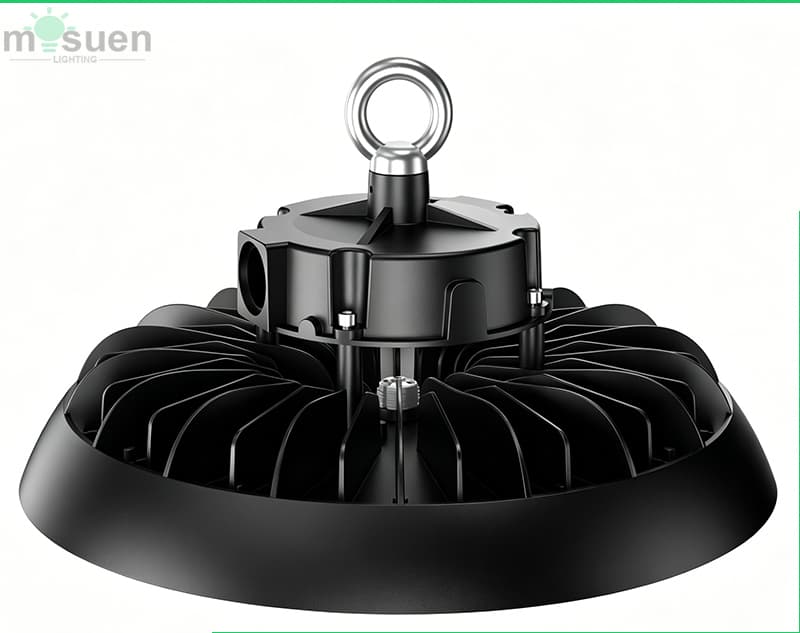
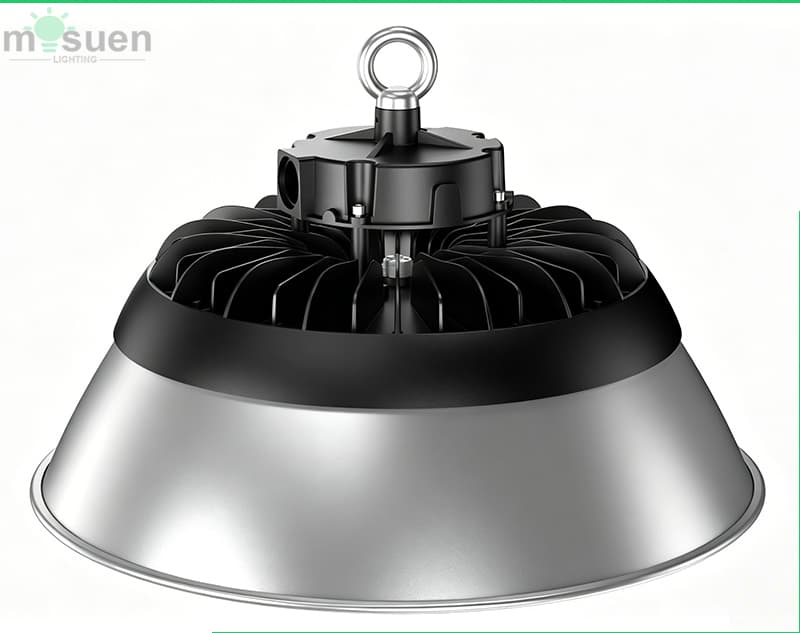
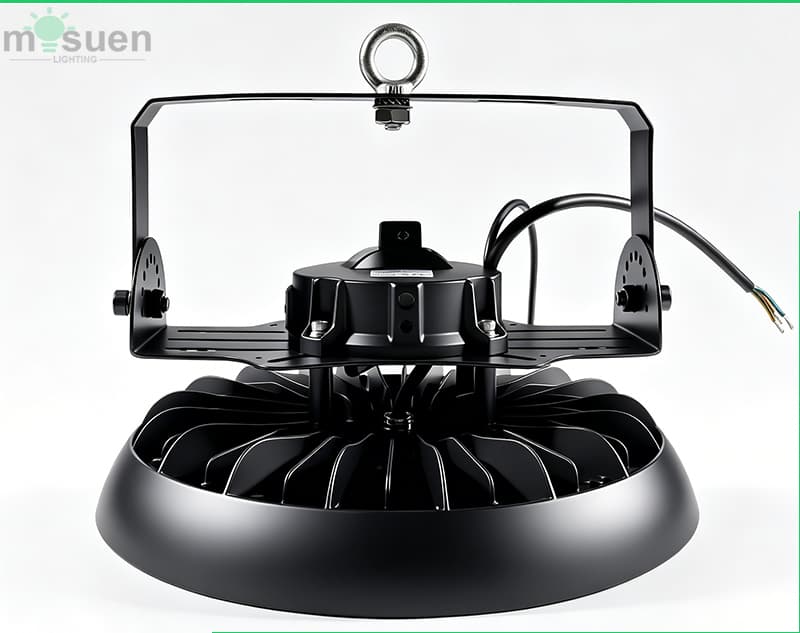
Technical Specifications Of LED High Bay Light
| Demension: | Ф248MM |
Ф275MM |
Ф312MM |
||
|---|---|---|---|---|---|
| Rated Power: | 100W |
150W |
200W |
||
| Switchable Power: | 100-80-60W |
150-120-90W |
200-160-120W |
||
| Lumen Efficacy: | 210lm/W |
||||
| Optional lm/W: | 130lm/W, 150lm/W, 170lm/W, 190lm/W |
||||
| LED Chip: | SMD2835 |
||||
| CRI: | Ra≥70 (or Ra≥80) |
||||
| CCT Color: | 4000K / 5000K / 6000K |
||||
| Beam Angle: | 60/90/120° |
||||
| Input Voltage: | AC200-240V, 50/60Hz (AC100-277V Optional) |
||||
| Flicker: | Non Flicker |
||||
| Power Factor: | PF≥0.92 |
||||
| IP Rating: | IP65 |
||||
| Housing Color: | Black or White Color |
||||
| Function Optional: | Emergency Battery, Microwave Motion Sensor, 1-10V/Triac Dimmer |
||||
| Material: | Aluminum + PC Lens |
||||
| Working Temp: | -30°C to +45°C |
||||
| Working Humidity: | 10% to 90% RH |
||||
| Lifespan: | 50,000H |
||||
| Warranty: | 5 Years |
||||
Picture of Product
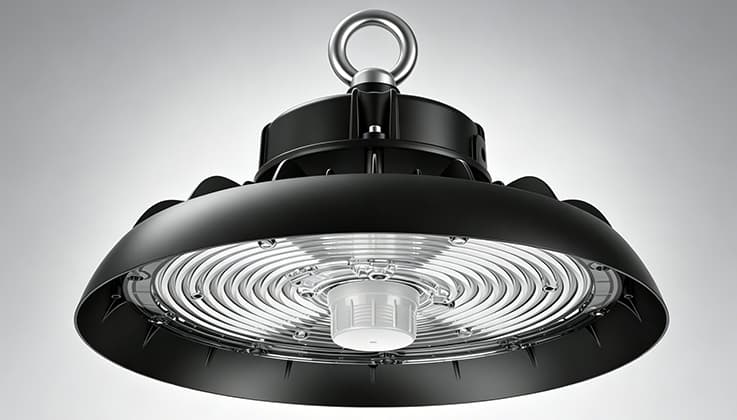
Professional Motion Sensor LED High Bay Light
The Motion Sensor 210lm/W LED High Bay represents a breakthrough in energy-efficient industrial lighting for large-scale factory environments. With an exceptional luminous efficacy of 210 lumens per watt, this professional-grade fixture combines cutting-edge LED technology with intelligent motion detection capabilities, delivering unprecedented cost savings for warehouse, manufacturing, and logistics operations. The fixture's sophisticated adaptive power switching system automatically adjusts between 150W, 120W, and 90W operational modes based on real-time motion detection and ambient light conditions, ensuring optimal illumination while minimizing unnecessary electricity consumption during periods of reduced activity.
Unlike conventional static high bay lighting systems that consume consistent power regardless of occupancy or operational requirements, this motion-sensor-equipped solution provides dynamic energy management. The 210lm/W specification far exceeds industry standards for high bay applications, translating to a 25-35% reduction in overall electrical consumption compared to traditional metal halide or sodium vapor fixtures still prevalent in many industrial facilities. This exceptional efficiency, combined with the intelligent power scaling capabilities, makes this LED high bay system the most cost-effective solution for factory lighting applications requiring extended operational hours with variable occupancy patterns.
Why Motion Sensor Technology Matters for Factory Lighting
Modern large factories operate with complex workflow patterns where not all areas require constant maximum illumination simultaneously. Production zones, storage areas, loading docks, and maintenance sections experience variable occupancy throughout operational shifts. The integrated motion sensor in this LED high bay automatically detects worker presence and movement, enabling the fixture to operate at full 150W capacity only when needed, automatically downscaling to 120W or 90W power consumption during periods of reduced activity. This intelligent responsiveness prevents the wasteful energy consumption characteristic of statically-configured lighting systems, where fixtures burn at maximum output regardless of actual requirements. Over a typical factory operating schedule of 16 hours daily across 250 working days annually, the motion sensing and adaptive power capabilities deliver measurable financial returns. A 5,000-square-meter warehouse facility with 40 installed high bay fixtures can reduce annual lighting costs by $12,000-$18,000 through the combination of superior luminous efficacy and motion-triggered power optimization. For larger industrial complexes with multiple production and storage areas, the cumulative energy savings become even more significant, often exceeding $50,000 annually.
Advanced Technical Specifications & Performance Metrics
1. Luminous Efficacy: 210lm/W Performance Leadership
The 210 lumens-per-watt efficacy rating positions this LED high bay at the forefront of industrial lighting technology. This specification represents the amount of visible light output measured in lumens relative to the electrical power input in watts. Superior luminous efficacy directly correlates to reduced operating costs, as less electricity is required to achieve required illumination levels. The 210lm/W rating is achieved through optimization of premium phosphor-coated LEDs (typically 5000K-6500K color temperature), advanced optical lens design, and high-efficiency power conversion circuitry.
For practical comparison: a traditional 400W metal halide high bay fixture produces approximately 35,000-40,000 lumens at 87.5-100 lm/W efficiency. This equivalent illumination level is achieved by the 150W mode of the motion sensor LED high bay (150W × 210lm/W = 31,500 lumens), representing a 62.5% reduction in electrical consumption for comparable light output. When operating in 120W mode (25,200 lumens), the energy savings increase to 70%, while the 90W mode (18,900 lumens) provides sufficient illumination for many storage and auxiliary areas with an 77.5% energy reduction versus traditional systems.
2. Intelligent Power Mode Switching System
The tri-level power management architecture (150W / 120W / 90W) represents a sophisticated approach to matching lighting output to actual operational requirements. This isn't simply a basic on-off dimming system, but rather a strategically designed multi-stage power configuration that optimizes both illumination quality and energy efficiency. The motion sensor operates in conjunction with an integrated photocell (ambient light sensor), creating a two-dimensional control logic:
- High Activity + Low Ambient Light: System operates at 150W maximum output, providing full 31,500 lumens for comprehensive factory illumination during active production or high-traffic periods with minimal natural light
- Medium Activity + Moderate Ambient Light: System automatically reduces to 120W mode (25,200 lumens), delivering energy savings while maintaining adequate illumination for general work areas and partly overcast daylight conditions
- Low Activity + High Ambient Light: System minimizes consumption at 90W mode (18,900 lumens), sufficient for maintenance tasks, inventory management, or periods with significant natural daylight supplementation
- No Motion Detected + Any Light Level: System automatically enters low-power standby state (typically 5-8W), eliminating energy waste in unoccupied areas while maintaining instant response capability when motion is detected
3. IP65 Enclosure Rating - Industrial-Grade Protection
The IP65 classification guarantees robust environmental protection suitable for demanding factory environments. The IP (Ingress Protection) rating system's first digit (6) indicates dust-tight protection—complete prevention of dust ingress even under challenging conditions typical of manufacturing facilities with airborne particulates. The second digit (5) specifies water-jet protection against low-pressure water sprays from any direction, essential for facilities with regular cleaning protocols, humidity control systems, or potential water exposure from adjacent processes.
The aluminum housing construction provides superior corrosion resistance compared to steel alternatives, particularly important in facilities exposed to chemical processes, salt air (coastal manufacturing), or high-humidity environments like food production plants or textile facilities. The sealed gasket design prevents condensation ingress during temperature fluctuations common in industrial settings, eliminating optical degradation from internal moisture accumulation and extending fixture lifespan significantly.
4. Premium Aluminum Housing Architecture
The purpose-engineered aluminum housing serves multiple critical functions beyond simple enclosure. Primary functions include advanced thermal management—aluminum's superior thermal conductivity (237 W/m·K compared to steel's 50 W/m·K) enables efficient dissipation of LED operating heat, maintaining optimal junction temperatures and preserving long-term luminous output stability. Secondary benefits include lightweight construction reducing installation complexity and structural load on building infrastructure, along with excellent electromagnetic shielding properties inherent to aluminum construction, providing immunity to electrical interference common in industrial environments with variable frequency drives and motor control equipment.
5. Flicker-Free Driver Technology
The integrated flicker-free driver operates at high switching frequencies (typically 40-50 kHz), well above the human perceptual threshold and undetectable by standard digital cameras. This technological specification is critical for worker safety and productivity. High-frequency flicker in conventional fluorescent or poorly designed LED systems causes documented physiological effects: eye strain, headaches, reduced concentration, and decreased work accuracy. Industrial environments where precision tasks are performed—quality control, assembly operations, or detailed machining—particularly benefit from flicker-free illumination.
The flicker-free driver also implements active power factor correction, ensuring high power factor (>0.9) operation. This specification prevents harmonic distortion that would otherwise be introduced into facility electrical systems, protecting sensitive industrial equipment and reducing power losses in distribution infrastructure. The >0.9 power factor rating ensures compliance with international power quality standards (IEC 61000-3-2) and prevents utility company penalties for power factor degradation.
Comparative Analysis: Motion Sensor LED vs. Alternative Lighting Solutions
| Performance Metric | Motion Sensor LED 210lm/W (This Product) | Traditional LED High Bay (Static) | Metal Halide 400W |
|---|---|---|---|
| Power Consumption (Peak Mode) | 150W | 150-180W | 400W |
| Luminous Efficacy | 210 lm/W | 180-200 lm/W | 87.5-100 lm/W |
| Peak Luminous Output | 31,500 lumens | 27,000-36,000 lumens | 35,000-40,000 lumens |
| Motion Sensing Capability | ✓ Yes (Adaptive 3-Stage) | ✗ No (Optional extra) | ✗ No |
| Adaptive Power Switching | ✓ Yes (150W/120W/90W) | ✗ No (Fixed or manual dimming) | ✗ No (Fixed output) |
| Annual Energy Cost (per fixture, 16h/day) | $280-$320 | $400-$480 | $1,200-$1,440 |
| Annual Operating Cost Savings vs. Metal Halide | $920-$1,160 per fixture | $720-$960 per fixture | Baseline |
| Lifespan | 50,000+ hours (11.4 years at 16h/day) | 50,000+ hours | 15,000-20,000 hours (3.4-4.5 years) |
| Warm-Up Time | Instant (100% within 0.1 seconds) | Instant | 8-15 minutes for full output |
| Environmental Protection Rating | IP65 (Dust-tight, Water-jet resistant) | IP54-IP65 (Varies) | IP54-IP55 (Typical) |
| Maintenance Requirements | Minimal (5-7 year intervals) | Minimal (5-7 year intervals) | Frequent (ballast replacement, bulb changes) |
| Flicker-Free Operation | ✓ Yes (40-50 kHz switching) | ✓ Yes (most modern models) | ✗ No (inherent 100/120Hz flicker) |
| Environmental Impact | Low emissions, 100% recyclable electronics | Low emissions, 100% recyclable | Mercury-containing ballasts, high emissions |
| 5-Year Total Cost of Ownership (per fixture) | $2,100-$2,400 (purchase + energy + maintenance) | $2,400-$2,800 | $8,500-$10,200 |
Key Insight: Over a 5-year period, a factory with 50 high bay fixtures would invest $105,000-$120,000 using traditional LED units, compared to $56,000-$64,000 with motion sensor adaptive LED fixtures—delivering $41,000-$56,000 in direct cost savings while reducing carbon emissions by 15-20 tons CO₂ equivalent annually.
Industrial Applications & Facility Types
The motion sensor 210lm/W LED high bay is engineered for diverse industrial environments where variable occupancy and operational patterns make fixed-output lighting inefficient. The intelligent adaptive system automatically optimizes illumination to match actual requirements, delivering superior performance across multiple facility types:
1. Warehouse & Storage Facilities
Motion sensors detect worker movement during inventory management and order fulfillment. The adaptive power system reduces energy consumption by 40-50% in areas with intermittent activity, particularly effective for multi-zone facilities with varying shift patterns.
2. Manufacturing Plants
Production areas require full illumination during active operations, automatically downscaling during line shutdowns, maintenance periods, and shift changes. The 210lm/W specification ensures superior color rendering (CRI 85+) for quality control inspections.
3. Loading Docks & Shipping Areas
High activity during peak shipping periods triggers maximum 150W output, while off-peak hours automatically reduce to lower power modes. IP65 protection handles exposure to weather elements during door opening operations.
4. Maintenance & Support Facilities
Maintenance shops, tool storage, and equipment repair areas experience unpredictable occupancy. The motion sensing system ensures workers always have adequate illumination without wasteful energy consumption during unoccupied periods.
5. Food Processing & Agriculture
High-humidity environments benefit from aluminum housing corrosion resistance and IP65 sealed design. Flicker-free operation maintains worker focus during repetitive precision tasks in processing lines.
6. Textile Manufacturing & Garment Production
Color-sensitive quality control tasks demand flicker-free illumination. The 210lm/W efficacy provides superior light output for inspecting fabric quality while the motion sensor reduces energy during non-production periods.
Financial Impact: 5-Year ROI Analysis for 40-Fixture Installation
Additional Benefits Not Quantified in ROI: Reduced carbon emissions (15-20 tons CO₂/year), improved worker productivity and safety through flicker-free illumination, enhanced facility modernization perception, and potential utility company rebates (many utilities offer 25-40% rebates for LED upgrades in commercial/industrial applications).
Professional Certifications & Quality Assurance
This motion sensor LED high bay is engineered and tested to comply with stringent international standards ensuring reliability, safety, and performance consistency across global industrial applications:
Compliance with EMC & LVD Directives
North American Safety Standards
Harmonic Current Emissions
Safety of Luminaires Standard
LED Photometric Testing
Premium Component Quality
The fixture utilizes precision-engineered components from established industry leaders. The LED module incorporates premium phosphor-coated 5630-class LED dies providing consistent 5000K color temperature and 85+ CRI (Color Rendering Index) for accurate color perception. The flicker-free driver utilizes multi-stage power conversion with active power factor correction, delivering >0.9 power factor and <5% THD (Total Harmonic Distortion) compliance. Thermal management incorporates aluminum finned heatsinks with high-performance thermally conductive potting compounds, ensuring LED junction temperatures remain 15-20°C below maximum rated values even under continuous maximum-power operation.
Installation, Configuration & Commissioning
Pre-Installation Site Assessment
Successful deployment requires professional evaluation of facility-specific parameters. The motion sensor range (typically 5-8 meters diameter, adjustable) must be calibrated to match facility layout. In large open warehouses, multiple fixtures with overlapping detection zones ensure comprehensive occupancy monitoring. Conversely, narrow aisles may require reduced motion sensor sensitivity to prevent false triggering from adjacent area activity. The ambient light sensor (photocell) must be positioned to accurately measure natural or existing ambient illumination, typically on the fixture's upper surface with clear skylight/window exposure.
Power Supply & Electrical Integration
The fixture requires standard 120V or 240V AC supply (50/60 Hz) via appropriate hardwired connections or plug-mount adapters. The high power factor (>0.9) operation eliminates the need for power factor correction capacitors otherwise required by utility standards. A qualified licensed electrician should verify facility electrical panel capacity, as conversion from traditional 400W metal halide fixtures (consuming 400+ watts each) to 150W LED fixtures dramatically reduces overall facility electrical load, often enabling system upgrades without expensive panel replacement.
Motion Sensor Calibration & Sensitivity Adjustment
Professional commissioning includes motion sensor sensitivity calibration specific to facility type and occupancy patterns. Warehouses with forklift movement require higher sensitivity thresholds to prevent unnecessary power escalation. Conversely, manufacturing lines with repetitive fixed-position worker movement may require reduced sensitivity to avoid false triggering. Time-delay adjustment (typically 1-15 minutes) customizes how long the fixture remains at elevated power modes after motion ceases, optimizing energy efficiency for specific facility schedules.
Frequently Asked Questions
The 210 lumens-per-watt (210lm/W) specification measures how much visible light is produced per unit of electrical power consumed. It's the fundamental metric determining LED fixture efficiency and operational cost. A 150W LED fixture operating at 210lm/W produces 31,500 lumens—equivalent to a traditional 400W metal halide fixture at only 37.5% of the energy input. Over factory operating lifetime of 50,000 hours (approximately 11 years at 16 hours daily operation), a single fixture operating at 210lm/W rather than 100lm/W saves approximately $15,000-$20,000 in electricity costs while producing identical illumination. For facilities with 20-100 high bay fixtures, the cumulative energy savings often reach $300,000-$2,000,000 over system lifespan, making 210lm/W specification critical for cost-effectiveness calculations.
The integrated passive infrared (PIR) motion sensor detects infrared radiation changes from moving objects—specifically human body heat at 37°C radiating in wavelengths 5-15 microns. When motion is detected, the sensor triggers the fixture to operate at maximum 150W output. Crucially, an adjustable delay timer (factory default typically 5-10 minutes) prevents rapid on-off cycling. If motion ceases, the fixture doesn't immediately shut down; instead, the delay timer counts down. If additional motion is detected before the timer expires, the countdown resets—the fixture remains at high power output. Only when the complete delay period elapses without detected motion does the system step down to lower power modes or minimal standby consumption. This intelligent logic prevents flicker and power cycling that would damage LED drivers and reduce system lifespan. Advanced models offer occupancy pattern learning, where the system analyzes historical usage data and automatically adjusts sensitivity and delay timing to match specific facility schedules and occupancy patterns.
This is a critical distinction affecting cost and performance. Adding external motion sensors to standard LED fixtures involves several disadvantages: (1) External sensors typically offer limited wireless range (20-40 feet), requiring multiple units per large facility; (2) External wireless sensors require battery replacement every 2-3 years, increasing maintenance costs; (3) External sensors cannot communicate with the LED driver's internal dimming circuits, limiting functionality to simple on-off switching rather than intelligent power mode adaptation; (4) Installation complexity increases with additional wiring and mounting; (5) System reliability decreases with additional wireless communication points vulnerable to interference. In contrast, this integrated motion sensor model features factory-synchronized sensor-to-driver communication enabling sophisticated three-stage power adaptation (150W/120W/90W), photocell integration for ambient light response, and hardwired reliability with zero wireless interference risk. The integrated approach delivers superior functionality, lower lifetime maintenance costs, and superior energy optimization impossible with retrofit sensor systems.
A typical calculation for a 5,000 square meter warehouse: Most industrial facilities use approximately one high bay fixture per 50-80 square meters of floor area depending on ceiling height and required illumination levels. A 5,000 sq meter facility would require approximately 60-100 fixtures. Assuming 70 fixtures at average 150W consumption (traditional non-motion-sensor fixture) consuming power 16 hours daily for 250 working days annually: Traditional LED system = 70 fixtures × 150W × 16 hours/day × 250 days/year = 42,000,000 Wh annually = 42,000 kWh/year. At average industrial electricity rates of $0.12/kWh, annual cost = $5,040. With motion sensor adaptive LED at average 35% energy reduction (accounting for ~30% time at reduced power modes): 42,000 kWh × 65% = 27,300 kWh/year × $0.12 = $3,276 annually. Annual savings = $5,040 - $3,276 = $1,764. Over 5-year lifespan = $8,820 total energy savings. Adding hardware cost ($8,000-$9,000 for 70 units) and installation ($2,000-$3,000), total investment is $10,000-$12,000, yielding payback in approximately 5.7-6.8 years, with additional savings continuing through the fixture's 50,000-hour operational life.
IP65 protection is absolutely essential for industrial environments and provides substantial performance and lifespan advantages justifying the additional cost. The IP rating's first digit (6) specifies dust-tight protection. Factories inherently generate airborne dust from manufacturing processes, material handling, ventilation systems, and worker activity. Dust accumulation on LED optical surfaces directly degrades luminous output—a 10% dust coating can reduce light output by 15-25%. IP54 or IP55 rated fixtures (common cheaper alternatives) allow dust ingress, requiring more frequent maintenance cleaning (typically 6-12 months) to maintain performance. IP65 fixtures eliminate this issue entirely. The second digit (5) specifies water-jet protection. While this may seem unnecessary indoors, many factories incorporate regular cleaning protocols using high-pressure washers, humidity control systems creating condensation, or chemical processes introducing moisture. Additionally, emergency fire suppression systems activate unpredictably. IP65 protection ensures the fixture maintains full functionality even when exposed to these moisture scenarios. Most critically, the sealed gasket design prevents condensation from forming inside the fixture housing during temperature cycling common in industrial environments (morning startup, lunch period shutdowns, evening shutdown). Condensation inside fixtures creates optical degradation, potential electrical hazards, and premature component failure. The small additional cost of IP65 rating ($50-$150 per fixture) is recovered in extended maintenance intervals and reduced premature replacement, making it highly cost-effective for industrial applications.
Modern motion sensor LED fixtures incorporate intelligent power-loss recovery protocols. When power is restored following a utility outage, the fixture automatically resumes operation at a pre-programmed default state (typically 150W full output), ensuring immediate illumination without manual intervention. Occupancy history and sensitivity calibration data are stored in non-volatile memory circuits that maintain information independently of main power supply. Advanced models incorporate small backup capacitor systems that allow the microprocessor to safely shut down gracefully during power interruptions, protecting firmware integrity. Once power is restored, the system automatically re-initializes with all previous settings intact. Workers experience seamless restoration of familiar lighting characteristics. No manual recalibration or reprogramming is necessary following power outages, regardless of duration (seconds to hours). However, extremely prolonged outages (days or weeks) may require professional recommissioning to verify sensor functionality and potentially re-verify motion detection zones, though this is rarely necessary with robust commercial-grade systems.
Yes, absolutely. Professional-grade motion sensor LED fixtures include user-accessible bypass modes allowing flexible operation: (1) Manual full-power override—accessible via a simple manual switch or wireless remote control, forcing the fixture to 150W maximum output regardless of motion detection; (2) Time-scheduled bypass using integrated programmable logic allowing specific operational hours (e.g., 8am-4pm) to run at full power with motion sensing disabled, then automatically revert to motion-sensing optimization during off-peak hours or overnight; (3) Sensor disable mode accessed via service menu, completely deactivating motion sensing and converting the fixture to standard continuous-operation LED behavior if required. Facilities with specific operational requirements (high-precision quality control requiring consistent maximum illumination, temporary events requiring maximum visibility, or new facility layout evaluation) can easily switch to desired operational modes. The flexibility of modern motion sensor systems makes them suitable for diverse facility types and changing operational requirements without requiring fixture replacement.